

Start your free trial
Verify all code. Find and fix issues faster with SonarQube.
Get startedUnderstanding data resiliency
Data is the lifeblood of any organization, fueling decision-making, driving innovation, and underpinning operational continuity. However, data is vulnerable to disruption from system failures, cyber-attacks, or natural disasters.
Data resiliency is the strategy that ensures data availability, integrity, and security, allowing a system to continue functioning even when its data is under threat. This concept has become paramount as organizations rely more heavily on data.
It goes beyond simply recovering lost data; it's about preventing data loss and ensuring continuous access, even during a disruption. At its core, data resiliency is about guaranteeing that data remains accessible and accurate regardless of what happens.
The importance of data resiliency in software development
In software development, applications rely heavily on data for their functionality, and any disruption can have significant impacts. Data resiliency strategies ensure applications remain functional and reliable when facing data-related issues.
These strategies are crucial for:
- Preventing data loss and ensuring data integrity and availability, all of which are vital for the smooth operation of software applications.
- Delivering a seamless and reliable user experience, a key factor in the success of any software application.
For software organizations, the codebase is a critical asset. The information that SonarQube stores about your code through repeated analysis to check for security, quality, and maintainability helps build high value into that asset. Just as you protect your code, it's important to protect the SonarQube data about your code.
The five pillars of data resiliency
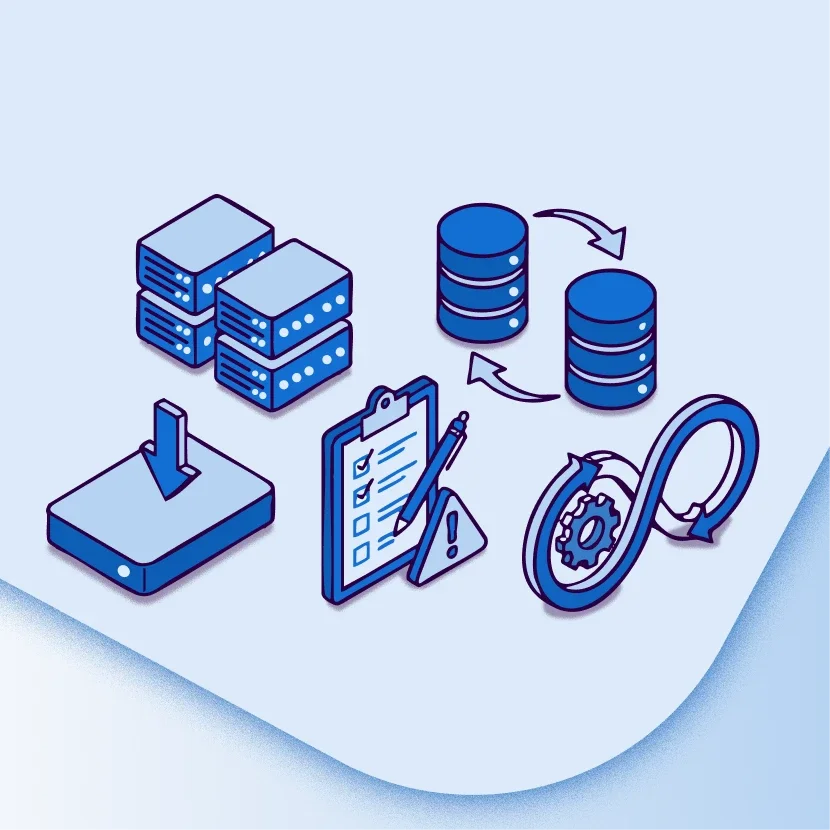
Data resiliency is a comprehensive strategy built on five foundational elements:
- Redundancy
- Replication
- Backups
- Disaster recovery planning
- Business continuity
Redundancy: The first line of defense
Redundancy is the practice of creating multiple copies of data. This ensures that even if one copy is lost or corrupted, other copies are immediately available to maintain data availability and integrity.
Replication: Ensuring real-time data availability
Replication involves creating exact copies of data in real time. This is particularly important when continuous, real-time data availability is crucial. Replication protects against site-specific failures and ensures data is always available when needed.
Backups: The cornerstone of data recovery
Backups involve making copies of data at regular intervals for restoration in the event of a loss or corruption. Backups are a cornerstone of data resiliency, providing a safety net to help organizations quickly recover data and resume operations.
Disaster recovery planning: Preparing for the worst
Disaster recovery planning (DRP) focuses on preparing for potential data disruptions and establishing clear procedures to recover data and resume operations after a disaster. DRP is a critical component for ensuring organizations can quickly restore services, even after the worst-case disruption.
Business continuity: Keeping operations running
Business continuity goes beyond data recovery to include strategies and measures that maintain operational functionality during and after a disaster. By ensuring operations can continue even during a disruption, organizations minimize downtime, maintain service delivery, and mitigate the business impact.
Implementing data resiliency strategies
Implementing data resiliency requires a systematic and strategic approach.
- Assess risks and identify critical assets: Start by understanding the organization's data landscape and identifying potential risks and vulnerabilities. Critical data assets are the elements most vital to the organization’s operations and services, which must be prioritized in the resiliency strategy.
- Develop a comprehensive plan: Create a detailed data resiliency plan that outlines the strategies and measures for ensuring data availability, integrity, and security. This plan must cover all five pillars: redundancy, replication, backups, disaster recovery planning, and business continuity.
- Review and update regularly: The plan must be regularly reviewed and updated to ensure its effectiveness in the face of evolving threats and technologies.
Best practices for data resiliency
Data resiliency is an ongoing process, not a one-time effort. Best practices for maintaining strong resiliency include:
- Regular testing and updating of resiliency plans.
- Employee training and awareness.
- The use of advanced technologies such as cloud computing and AI.
A proactive approach is crucial in the face of evolving technology and threats. This involves continuously monitoring and updating data resiliency strategies to address emerging risks and leverage new technologies, requiring a commitment to continuous learning and adaptation.
SonarQube Data Center Edition is specifically well-equipped to handle the challenges of data resiliency along with other enterprise needs.