Sicherheit in der Software-Lieferkette
SonarQube bietet die unverzichtbare Code-Prüfungsschicht für Ihre gesamte Software-Lieferkette und stellt sicher, dass der gesamte Code und alle Abhängigkeiten über den gesamten Entwicklungszyklus hinweg produktionsbereit und sicher sind.
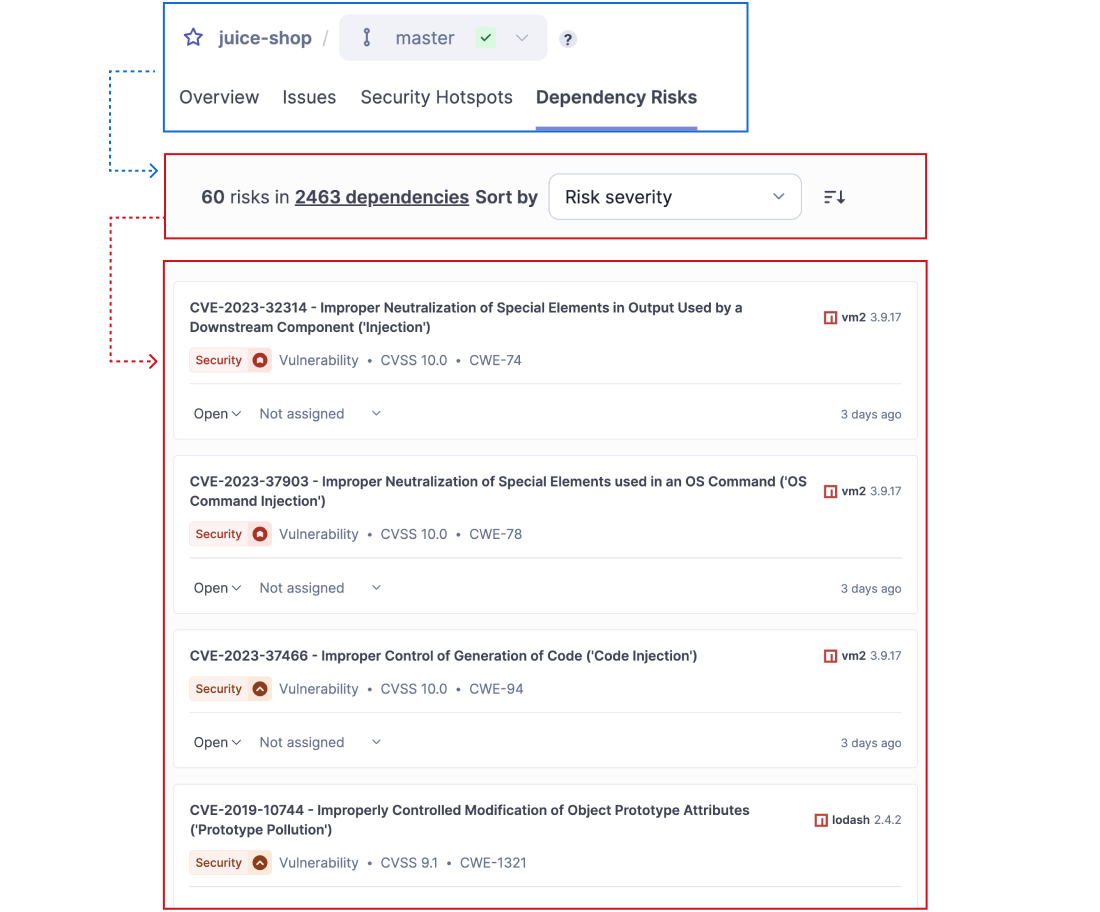


So sichert SonarQube Ihre Software-Lieferkette
SonarQube sichert Ihre Lieferkette mit einer einheitlichen Code-Prüfungsschicht für Logik, Sicherheitsabhängigkeiten und Anmeldedaten. Automatisierte Qualitätskontrollen stellen sicher, dass der gesamte Code produktionsbereit und sicher ist, bevor er in Ihren Git-Verlauf gelangt.

Abhängigkeiten von Drittanbietern
SCA identifiziert bekannte Sicherheitslücken (CVEs) und bösartige Pakete in Open-Source-Bibliotheken und sorgt für die Einhaltung von Lizenzen.

Geheimnisse und Anmeldedaten
Die automatisierte Erkennung erfasst fest codierte Geheimnisse, Tokens und Passwörter in der IDE oder über die SonarQube-Secrets-CLI, bevor sie überhaupt in Ihren Git-Verlauf gelangen.

Drittanbieter-Bibliotheken
Erweiterte SAST analysiert, wie Ihr Code mit Open-Source-Bibliotheken interagiert, um komplexe Injection Schwachstellen aufzudecken.

Sichere Pipeline-Workflows
SonarQube erkennt falsch konfigurierte GitHub Actions und Azure Pipelines. Durch die frühzeitige Identifizierung von nicht fixierten Aktionen und Skript-Injektionen verhindern Sie, dass Angreifer Workflows ausnutzen, bevor ein Angriff beginnt.

Java

JavaScript

TypeScript

Python

C#

C

C++

GO

Kotlin

Scala

Ruby

Rust

Kubernetes

Terraform

CloudFormation

Docker

NPM

Apache Maven

Conan

NuGet
Was macht die Lieferkettensicherheit von SonarQube in der Branche einzigartig?

Abhängigkeitsbewusste Analyse
Im Gegensatz zu eigenständigen SCA-Tools verfolgt Sonar Datenflüsse von Ihrem Code in Bibliotheken von Drittanbietern, um versteckte Sicherheitsrisiken aufzudecken, die herkömmliche Scanner übersehen.
Präventionsorientierte Erkennung von Geheimnissen
Stoppen Sie Geheimnisse an der Quelle mit der Sonar-Secret-CLI und SonarQube für IDE, wodurch kostspielige Anmeldeinformationsrotationen und das Umschreiben der Git-Historie entfallen.

Einheitliche Governance
Konsolidieren Sie Qualität und Sicherheit in einem einzigen Workflow mit zentralisierten Qualitätskontrollen und schaffen Sie so eine zentrale Informationsquelle für Plattform-Engineering- und Sicherheitsteams.
Why your supply chain attack surface is expanding
Read more
Stop malicious packages in your CI/CD pipeline
Read more
Software Supply Chain Security
Learn more
SonarQube Advanced Security vs. other SCA solutions
Learn more
Securing the software supply chain
Download
Developer-first SCA across your workflow with SonarQube
Download

What is software supply chain security and why does it matter?
Supply chain security involves securing everything that goes into your software, including first-party code, third-party libraries, and configuration files. It is critical because attackers increasingly target the "weak links" in open-source dependencies or exposed secrets to gain unauthorized access to enterprise systems.
How does SonarQube differ from traditional SCA tools?
Most SCA tools only provide a list of vulnerabilities found in your dependencies. SonarQube goes further by integrating SCA with Advanced SAST. This allows you to see if your code actually interacts with a vulnerable library, reducing noise and helping developers prioritize the fixes that actually reduce risk.
What are the most common types of software supply chain attacks?
Common software supply chain attacks include compromising popular open source packages, inserting malicious code into build scripts or CI/CD pipelines, tampering with artifacts in registries, and abusing unverified third‑party services.
In dependency‑focused attacks, adversaries may publish malicious updates to widely used libraries or exploit known vulnerabilities like Log4Shell, instantly impacting thousands of applications that transitively rely on the affected component.
Other attack patterns focus on the development and delivery process itself—abusing compromised developer credentials, manipulating build environments, or poisoning artifacts so that every downstream consumer inherits the compromise.
Because these attacks exploit existing trust relationships, they can remain undetected for long periods and are often discovered only after widespread damage has occurred, making prevention and early detection critical.
What are best practices to improve software supply chain security?
Strong software supply chain security starts with comprehensive inventory and governance: maintain an up‑to‑date view of all software components, enforce clear policies for third‑party usage, and conduct regular vulnerability scanning across your environment.
Complement this with proactive vendor and OSS evaluation, continuous monitoring and threat intelligence, and a well‑defined incident response plan so you can react quickly when high‑profile vulnerabilities or breaches emerge.
At the development level, integrate security into the SDLC with code review, automated testing, and developer training that emphasizes code quality and secure use of dependencies.
Adopting frameworks like SLSA or related industry standards helps structure your efforts, while focusing on new code quality—sometimes described as quality at the source or a focus on new code—lets you enforce strong gates on every change without being blocked by legacy issues.