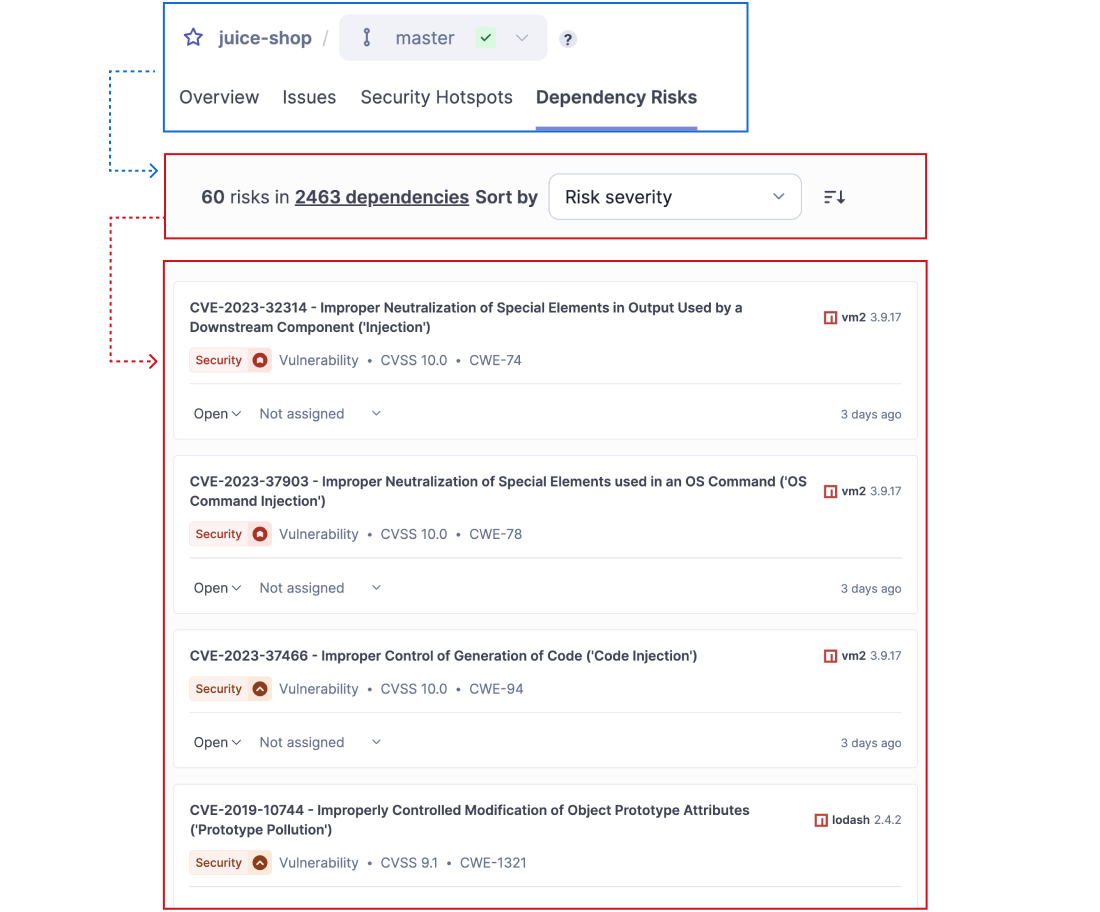


SonarQube 如何保障您的软件供应链安全
SonarQube 通过统一的代码验证层,针对逻辑、安全依赖项和凭据,全面保障您的供应链安全。自动化的质量门控机制确保所有代码在进入 Git 历史记录之前,均已具备生产就绪性且安全无虞。

第三方依赖项
SCA 可识别开源库中的已知安全漏洞 (CVE) 和恶意包,并强制执行许可证合规性。

机密与凭证
自动化检测功能可在机密、令牌和密码进入 Git 历史记录之前,通过 IDE 或 SonarQube 机密 CLI 捕获硬编码的机密信息。

第三方库
高级静态应用安全测试(SAST)可分析您的代码与开源库的交互方式,从而发现复杂的注入漏洞。

安全的管道工作流
SonarQube 可检测配置错误的 GitHub Actions 和 Azure Pipelines。通过尽早识别未固定的操作和脚本注入,您可以在安全事件发生前阻止攻击者利用工作流。

Java

JavaScript

TypeScript

Python

C#

C

C++

GO

Kotlin

Scala

Ruby

Rust

Kubernetes

Terraform

CloudFormation

Docker

NPM

Apache Maven

Conan

NuGet
SonarQube 的供应链安全为何在业内独树一帜?

依赖项感知分析
与独立的 SCA 工具不同,Sonar 会追踪数据从您的代码流向第三方库的路径,从而发现传统扫描器遗漏的隐藏安全风险。
以预防为先的机密检测
通过 Sonar 机密 CLI 和 SonarQube for IDE 在源头阻止机密泄露,从而避免昂贵的凭证轮换和 Git 历史重写。

统一治理
通过集中化的质量门将质量和安全整合到单一工作流中,为平台工程和安全团队提供单一可信数据源。
Why your supply chain attack surface is expanding
Read more
Stop malicious packages in your CI/CD pipeline
Read more
Software Supply Chain Security
Learn more
SonarQube Advanced Security vs. other SCA solutions
Learn more
Securing the software supply chain
Download
Developer-first SCA across your workflow with SonarQube
Download

What is software supply chain security and why does it matter?
Supply chain security involves securing everything that goes into your software, including first-party code, third-party libraries, and configuration files. It is critical because attackers increasingly target the "weak links" in open-source dependencies or exposed secrets to gain unauthorized access to enterprise systems.
How does SonarQube differ from traditional SCA tools?
Most SCA tools only provide a list of vulnerabilities found in your dependencies. SonarQube goes further by integrating SCA with Advanced SAST. This allows you to see if your code actually interacts with a vulnerable library, reducing noise and helping developers prioritize the fixes that actually reduce risk.
What are the most common types of software supply chain attacks?
Common software supply chain attacks include compromising popular open source packages, inserting malicious code into build scripts or CI/CD pipelines, tampering with artifacts in registries, and abusing unverified third‑party services.
In dependency‑focused attacks, adversaries may publish malicious updates to widely used libraries or exploit known vulnerabilities like Log4Shell, instantly impacting thousands of applications that transitively rely on the affected component.
Other attack patterns focus on the development and delivery process itself—abusing compromised developer credentials, manipulating build environments, or poisoning artifacts so that every downstream consumer inherits the compromise.
Because these attacks exploit existing trust relationships, they can remain undetected for long periods and are often discovered only after widespread damage has occurred, making prevention and early detection critical.
What are best practices to improve software supply chain security?
Strong software supply chain security starts with comprehensive inventory and governance: maintain an up‑to‑date view of all software components, enforce clear policies for third‑party usage, and conduct regular vulnerability scanning across your environment.
Complement this with proactive vendor and OSS evaluation, continuous monitoring and threat intelligence, and a well‑defined incident response plan so you can react quickly when high‑profile vulnerabilities or breaches emerge.
At the development level, integrate security into the SDLC with code review, automated testing, and developer training that emphasizes code quality and secure use of dependencies.
Adopting frameworks like SLSA or related industry standards helps structure your efforts, while focusing on new code quality—sometimes described as quality at the source or a focus on new code—lets you enforce strong gates on every change without being blocked by legacy issues.