





重拾专注
告别在多个标签页间来回切换、中断工作流程的困扰。通过 AI 助手,直接从 SonarQube 获取关于 bug、漏洞和代码异味的即时答案。在提交代码前进行分析,让代码质量成为工作流中无缝衔接的一部分。

AI 加速了代码创建,但同时也产生了一个新的瓶颈:验证。编写代码节省的时间被缓慢的手动验证过程消耗殆尽,从而限制了 AI 工具的投资回报率。
获取关键代码情报需要离开对话式工作流。这种频繁的上下文切换会打断开发者的专注力,并破坏 AI 本应提供的无缝体验。
随着团队采用新的 AI 工具,平台工程师不得不承担构建和维护脆弱的、一次性集成的生态系统的重担。这种定制工作效率低下、成本高昂且无法扩展。
当代码验证被视为事后考虑时,AI 生成的代码很容易引入 bug、漏洞和技术债务。这会造成不可接受的业务风险,并破坏您的质量和安全标准。
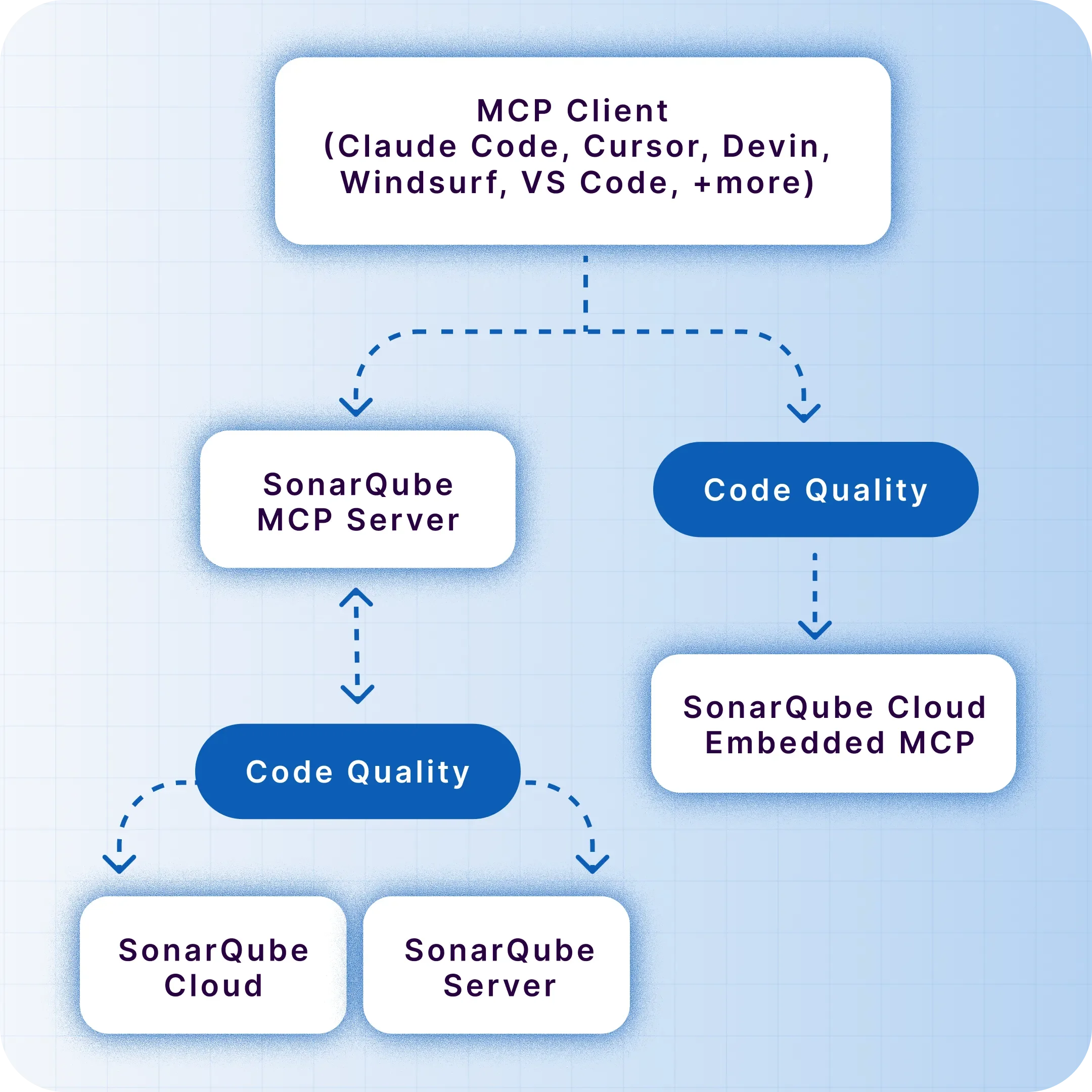
SonarQube MCP Server 将 SonarQube 的静态分析集成到 AI 工作流中。我们为 SonarQube Cloud 提供的原生 MCP 通道,提供了一种无需任何操作、开箱即用的方式,将您的 AI 工具连接到您信赖的代码智能。对于 SonarQube Server 用户或本地开发场景,我们还提供基于 Docker 的自管式通道。

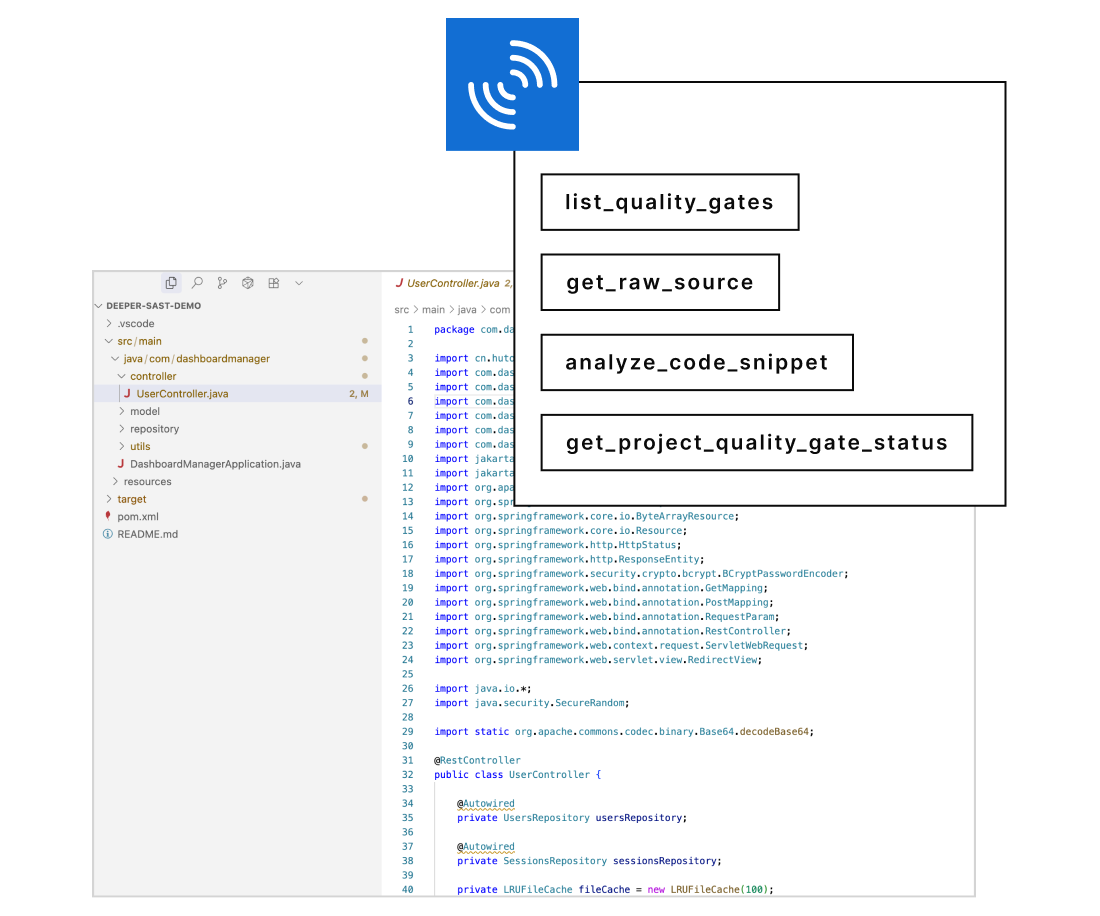
通过 SonarQube Advanced Security 查询项目质量门状态、搜索项目中的依赖风险,或仅需提出一个简单的自然语言问题即可分析新的代码片段。
无需在编辑器和 SonarQube 界面之间来回切换,避免中断工作。保持专注,提升效率。
超越分析阶段。直接通过 AI 助手交互式地更新问题状态或标记误报,将洞察即时转化为行动。
用户现在可以选择两种方法将 AI 工具连接到 SonarQube:
在工作站上运行 Docker 容器,以连接 IDE 和 SonarQube
使用 SonarQube Cloud 中的嵌入式端点实现集中访问,无需本地软件安装

开发人员用通俗的英语向 AI 代理询问代码质量或安全相关的问题。示例查询:“此文件中是否有新的漏洞?”

MCP 服务器将请求转换为针对您的 SonarQube 实例(云端或服务器)的精确查询,并识别应使用的正确工具,例如 search_sonar_issues_in_projects。

AI 助手从 SonarQube 接收数据,并在开发者的编辑器中直接呈现清晰且可操作的答案,从而完成无缝的实时对话。
告别在多个标签页间来回切换、中断工作流程的困扰。通过 AI 助手,直接从 SonarQube 获取关于 bug、漏洞和代码异味的即时答案。在提交代码前进行分析,让代码质量成为工作流中无缝衔接的一部分。
"Using Amazon Q Developer with the Sonarqube MCP server integration, developers can receive real-time security and code quality feedback directly within their IDE while preserving the immersive 'vibe coding' experience. They maintain productivity and ensure best practices."
Patrick Madec, Sr. Solutions Architect
SonarQube MCP 通道可作为 SonarQube Cloud 的原生托管服务,也可作为 SonarQube Server 的开源 Docker 容器使用。选择适合您环境的部署方案,立即开始自动化质量验证。
4.6 / 5
The MCP Server is a centralized service that connects code analysis and developer tools so teams can consistently enforce standards, automate checks, and improve code quality across repositories. Teams get a single source of truth for code health, enabling faster remediation, standardized workflows, and reliable gates that improve release confidence.
If you are using SonarQube Cloud, no. You can connect to our managed, native MCP endpoint with zero installation. Docker is only required if you are using SonarQube Server or prefer a local-only development setup.
The MCP Server can act as a hub that complements SonarQube by coordinating analysis triggers and aggregating insights from multiple projects. It helps standardize policy enforcement so SonarQube conditions become part of your CI checks, keeping quality at the source and ensuring new code quality gates are applied consistently.
With SonarQube Cloud, the MCP Server can align cloud-based project analysis, ensuring unified governance and reporting. For developers, pairing MCP Server with SonarQube for IDE brings issues into the editor so they can fix problems before commit, strengthening quality at the source and reducing pipeline churn.
On Community Build, teams typically focus on core analysis workflows and baseline governance. The MCP Server can help standardize the basics—consistent rule usage, automated checks in CI, and streamlined reporting—so you achieve strong fundamentals for quality code without adding unnecessary complexity.
Commercial editions unlock advanced features like branch analysis, PR decoration, and enterprise governance. In those setups, the MCP Server can orchestrate broader policy management across multiple projects and repos, enhance PR workflows, and provide richer auditing—useful for larger organizations seeking robust quality at the source practices.
The MCP Server helps implement a focus on new code by making quality gates part of everyday development—on branches, pull requests, and pre-merge checks. By catching issues early, it encourages developers to keep changes small and fix problems in context, leading to better quality code with less rework.
Quality at the source is reinforced when developers see actionable feedback in the editor and CI feedback loops. The MCP Server makes those loops consistent across teams and repos, so standards don’t drift and code quality improves steadily with each change.
Yes, it’s designed to orchestrate checks across varied CI/CD platforms and many repositories, ensuring consistent enforcement and results. This is especially valuable in polyglot, multi-repo environments where maintaining unified standards can be challenging.
The MCP Server ensures that rules, gates, and reporting are applied uniformly, enabling efficient scaling without sacrificing developer velocity or code quality.
Developers benefit from immediate, in-editor feedback via SonarQube for IDE, allowing them to fix issues before committing. The MCP Server ensures those same standards are enforced in CI, creating a seamless loop where local fixes translate into passing builds and high new code quality.
This approach minimizes context switching and reduces surprise failures later in the pipeline. Developers spend less time chasing build breaks and more time writing quality code, with consistent feedback from the editor to the pull request.
By centralizing policies, the MCP Server makes it easier to enforce consistent security rules. This unified approach supports audit readiness and helps teams demonstrate adherence to internal and external standards.
Automated gates and standardized reporting reduce manual steps that can be error-prone. As a result, security and compliance become integral to the development flow, not an afterthought—improving both speed and rigor.
The MCP Server integrates quality checks into pull requests so reviewers see actionable findings before merge. This enables reviewers to focus on architecture and design decisions, while automated checks flag code smells, bugs, and vulnerabilities aligned to your policies.
Consistent, automated gates also reduce review friction—contributors know what’s required for approval, and reviewers trust that baseline quality signals are accurate. The net effect is faster, clearer decisions and higher-confidence merges.
The MCP Server coordinates analysis across multiple languages and toolchains by standardizing triggers, rules, and reporting, which is particularly helpful in monorepos. It ensures consistent gates regardless of language, keeping quality at the source across the entire codebase.
For hybrid environments, the MCP Server helps align on-prem SonarQube and SonarQube Cloud projects under a common governance layer. This harmonization enables unified visibility and policy enforcement, whether code is analyzed locally, in the cloud, or both.