
Table of contents
 What is remote code execution?
- Why remote code execution matters
- How remote code execution attacks work
- Common causes and vectors
- Remote code execution detection and tools
- Preventing remote code execution: Best practices
- Examples and case studies
- Remote code execution and modern security frameworks
- Regulatory compliance and remote code execution
- The future of remote code execution
- SonarQube and remote code execution
Start your free trial
Verify all code. Find and fix issues faster with SonarQube.
开始使用What is remote code execution?
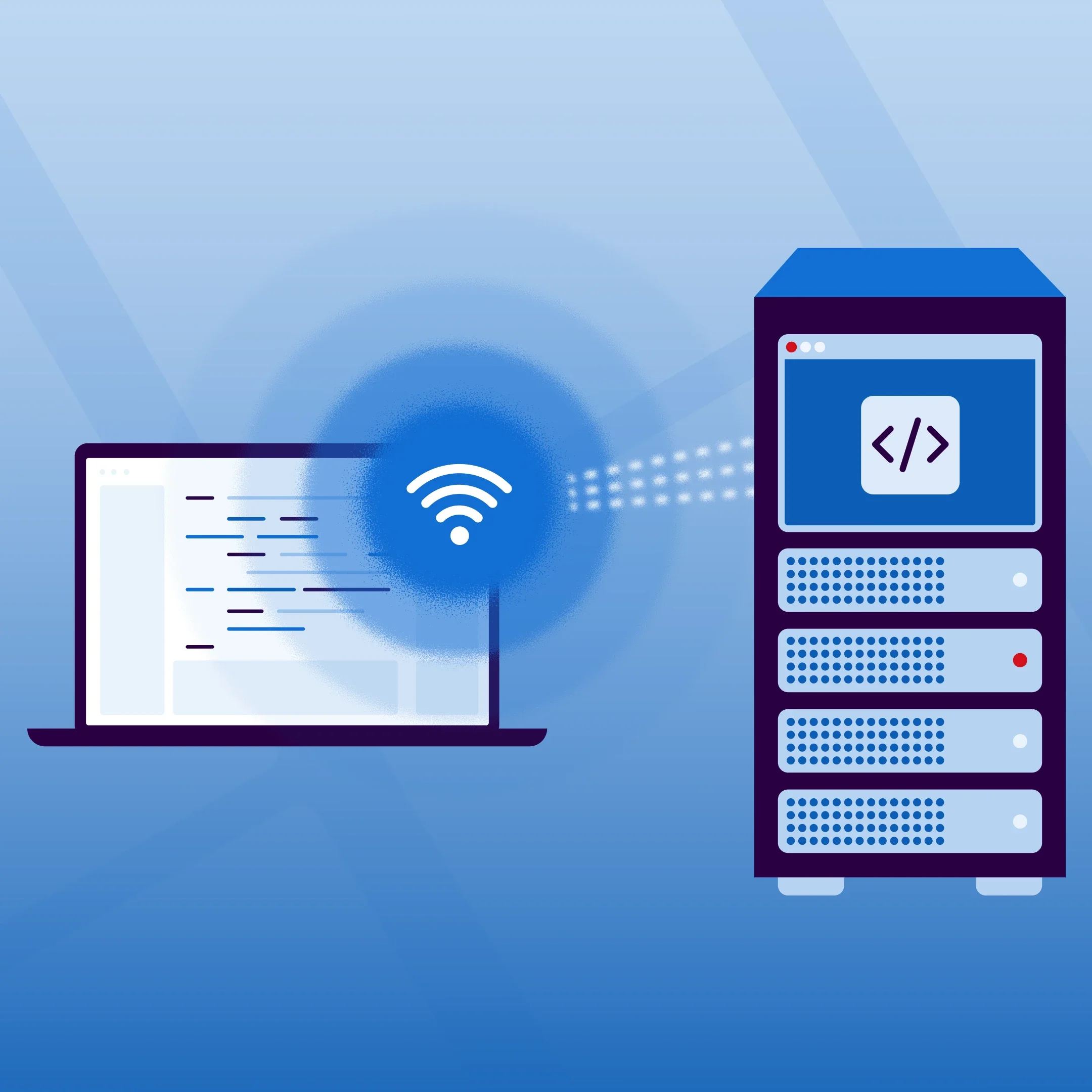
Remote code execution (RCE) is a critical software vulnerability that allows an attacker to run arbitrary code on a target system from a remote location. This class of security vulnerability is one of the most dangerous in the digital landscape, as it can lead to full system compromise, unauthorized access, and exposure of sensitive data. RCE exploits typically bypass normal access controls and protections, allowing for the manipulation or control of systems, applications, or network services.
Developers and security professionals frequently encounter RCE in web applications, APIs, and cloud software, where input validation flaws or insecure configurations create attack vectors. Understanding the mechanics of remote code execution is essential for securing applications and infrastructure in modern environments that rely heavily on connectivity and remote access.
Why remote code execution matters
RCE vulnerabilities pose a significant threat due to the potential for attackers to gain complete control over the target environment. Once exploited, malicious code can download malware, exfiltrate data, disrupt operations, or pivot to other network segments. This severe risk is why remote code execution is a top concern in vulnerability management, application security, and secure coding practices.
Addressing RCE requires robust threat modeling, adherence to secure development life cycles (SDLC), and continuous monitoring. Organizations that incorporate RCE risk reduction into their security posture benefit from improved data protection, regulatory compliance, and enhanced trust with users and stakeholders.
How remote code execution attacks work
Remote code execution attacks often exploit vulnerabilities in software components that process user inputs or external data. Common entry points include unvalidated web requests, insecure API endpoints, misconfigured servers, and vulnerable plugins. Attackers may inject executable payloads into inputs that the backend system mistakenly processes as code, leading to unauthorized command execution.
The impact of RCE attacks ranges from privilege escalation and lateral movement, to system downtime and data breaches. Examples include exploiting buffer overflows, unsafe deserialization, or vulnerable frameworks. Automated scanners, code review tools, and penetration testing are vital for identifying and validating possible RCE attack surfaces.
Common causes and vectors
Several factors can precipitate remote code execution vulnerabilities:
- Insufficient input validation and sanitization
- Unsafe use of system calls and dynamic code evaluation
- Exposure of debugging or testing interfaces in production
- Use of outdated libraries or software components with known exploits
API integration and open source components are particularly at risk because they often depend on external inputs and third-party code. Regular vulnerability scanning and patch management are indispensable for mitigating these risks.
Remote code execution detection and tools
Detecting RCE vulnerabilities requires a combination of manual and automated approaches, leveraging security tools to analyze code and runtime behavior. Static application security testing (SAST), dynamic application security testing (DAST), and specialized RCE scanners are used to identify exploit paths within applications.
Open source tools, commercial RCE scanners, and integrated development environment (IDE) plugins enhance developer awareness by flagging dangerous patterns. SonarQube, OWASP ZAP, and Burp Suite are popular examples, offering code analysis, security audits, and vulnerability management features. These tools support secure software development by integrating checks into CI/CD pipelines and developer workflows.
Preventing remote code execution: Best practices
Preventing RCE vulnerabilities relies on strong security principles, including defense in depth and the principle of least privilege. Key best practices include:
- Rigorous input validation and output encoding
- Avoiding unsafe code constructs, such as eval() in web applications
- Regular code reviews and static code analysis
- Timely application of security patches and updates
Organizations should implement secure coding guidelines and developer training to instill security awareness. Incorporating security testing into the development life cycle, such as automated unit tests for edge cases and threat scenarios, further reduces the risk of remote code execution exploits.
Examples and case studies
High-profile RCE exploits, such as the Equifax data breach and vulnerabilities in Microsoft Exchange and Apache Struts, illustrate the devastating impact of remote code execution. These incidents underline the need for proactive vulnerability management, code quality assurance, and real-time monitoring.
Case studies often reveal common failure points, such as neglected input validation, untested edge cases, and reliance on outdated components. Organizations that successfully mitigate RCE threats share their remediation strategies, including the deployment of intrusion detection systems (IDS), regular security audits, and adoption of bug bounty programs.
Remote code execution and modern security frameworks
RCE mitigation is central to security frameworks like OWASP Top 10, which ranks injection flaws and insecure deserialization among the most critical risks. Application security and vulnerability management platforms actively target RCE through automated security scanning, code assurance, and compliance reporting.
Integrating remote code execution prevention into DevOps pipelines, sometimes referred to as DevSecOps, ensures continuous security for rapidly evolving codebases. Security by design, privacy by design, and regular penetration testing are best-practice approaches endorsed by leading security experts.
Regulatory compliance and remote code execution
Compliance with standards such as GDPR, PCI-DSS, and ISO 27001 often requires organizations to demonstrate robust vulnerability management and incident response protocols. Remote code execution vulnerabilities, if left unaddressed, can lead to regulatory violations, loss of customer confidence, and significant financial penalties.
Security reporting and audit trail mechanisms track attempts and incidents related to RCE, enabling effective remediation and ongoing compliance. Automated vulnerability reporting, paired with actionable intelligence, empowers teams to close gaps quickly and efficiently.
The future of remote code execution
Remote code execution remains one of the most serious vulnerabilities facing modern applications, APIs, and infrastructure. By understanding its mechanics, adopting best practices in secure coding, and leveraging automated tools for detection and prevention, organizations can significantly reduce the likelihood of RCE exploits. Addressing this threat is crucial for maintaining software quality, protecting sensitive data, and preserving business continuity.
The future of RCE mitigation lies in continued innovation in security automation, threat intelligence, and developer education.
SonarQube and remote code execution
SonarQube is a leading solution for identifying, preventing, and managing remote code execution (RCE) vulnerabilities, across SonarQube Server, SonarQube Cloud, and SonarQube for IDE. Its comprehensive approach tackles the pain points of RCE with technical depth and workflow integration, supporting security, code quality, and developer productivity at scale.
Proactive, automated detection of RCE
SonarQube leverages advanced static application security testing (SAST) and taint analysis to detect security flaws that underpin RCE, such as injection vulnerabilities, command injections, unsafe deserialization, and buffer overflows. The platform’s rule sets, covering over 6,700 issues for 35+ languages, are tuned to industry standards like OWASP Top 10, CWE Top 25, NIST SSDF, and PCI DSS. SonarQube identifies exploitable flows, tracing untrusted input as it moves through an application, and flags when input reaches sensitive “sink” functions without sufficient validation or sanitization, which is the root cause of many RCE exploits.
This deep code analysis is not just static: SonarQube supports Software Composition Analysis (SCA) to uncover known RCE vulnerabilities in dependencies, and generates actionable Software Bill of Materials (SBOMs) to help organizations respond rapidly to new CVEs in open source libraries. Continuous secrets detection further ensures that sensitive information, often targeted in combination with RCE, is not exposed in code.
Shift-Left Security: Integrated early and often
A core strength of SonarQube is its “shift-left” philosophy, making vulnerability detection and prevention an always-on part of developer workflows. For Server and Cloud deployments, SonarQube integrates with all major CI/CD platforms to scan code as soon as it is committed, in every pull request and every build. This prevents code with RCE risks from moving downstream, enforcing security gates that block merges or deployments if unresolved vulnerabilities exist.
The same security rules are brought directly into the developer’s native environment through SonarQube for IDE. Tight IDE integration for Visual Studio, IntelliJ, Eclipse, and VS Code provides instant, in-context remediation guidance as developers type, empowering them to fix vulnerabilities before code leaves their workstation. Issues such as potential RCE, injections, and unsafe API usage are highlighted with clear explanations, code examples, and single-click links to deeper learning, teaching secure coding habits everyday.
Workflow synergy for modern teams
SonarQube unifies detection, triage, and remediation in a single platform. Its connected mode synchronizes rules and quality profiles between server/cloud and every developer’s IDE, ensuring a uniform security bar, regardless of where or when code is written. Developers can mark issues as “false positive” or “accepted” in the IDE, with workflow controls for security leads to approve, reject, or audit these changes and ensure organizational policy is enforced.
Remediation is streamlined: issues are mapped to detailed rules, with context-specific advice and AI CodeFix options for one-click fixes using state-of-the-art language models. This not only accelerates mean time to remediate (MTTR), but also offers learning-in-the-flow for developers dealing with security bugs for the first time.
Comprehensive reporting, audit, and compliance
Security and compliance teams rely on SonarQube’s rich dashboards and exportable reports to monitor unresolved RCE vulnerabilities, track trends over time, and prove adherence to regulatory frameworks such as PCI DSS, ISO 27001, and GDPR. Quality gates and role-based access controls enforce security thresholds, supporting rigorous SDLC governance and auditability. Every vulnerability’s status and history are tracked in detail, yielding a tamper-evident audit trail for all remediation activity.
Defense-in-depth for the AI era
SonarQube stays ahead of evolving threats by regularly updating its rule engines with community research, threat intelligence, and CVE advisories. With the explosion of AI-generated code, SonarQube detects and reviews code from AI assistants to ensure it meets the same stringent security standards as human-written code. AI Code Assurance and one-click remediation with “AI CodeFix” help teams maintain velocity without sacrificing security, even as coding paradigms evolve.