

TL;DR overview
- AI is fundamentally reshaping AI technical debt: 88% of developers report at least one negative impact, while 93% also cite measurable benefits — a "great toil shift" where old burdens are replaced by new ones.
- The biggest risk is plausible-looking but unreliable code: 53% of developers say AI generates code that appears correct yet introduces hidden defects and false security confidence.
- AI's top benefits include improved documentation (57%) and reduced time on legacy-code tasks, especially for senior developers navigating poorly documented systems.
- To escape the productivity paradox, teams should adopt a "vibe, then verify" culture backed by static code analysis — 70% of developers already use such tools, and SonarQube users report stronger outcomes on code quality and rework costs.
In our deep dives on the first four chapters of our State of Code Developer Survey report, we examined the rapid adoption of AI coding assistants and the growing "trust gap" emerging as code volume explodes. We’ve seen that while AI is accelerating the speed of generation, it has created a dangerous bottleneck in code verification.
This brings us to the fifth installment in our series, where we examine the on-the-ground reality for software engineers. In Chapter 4 of our report, "Meet the new developer toil", we uncover a hard truth: AI isn’t eliminating the frustrating, repetitive work that hinders productivity—it’s simply changing its shape.
The illusion of toil savings
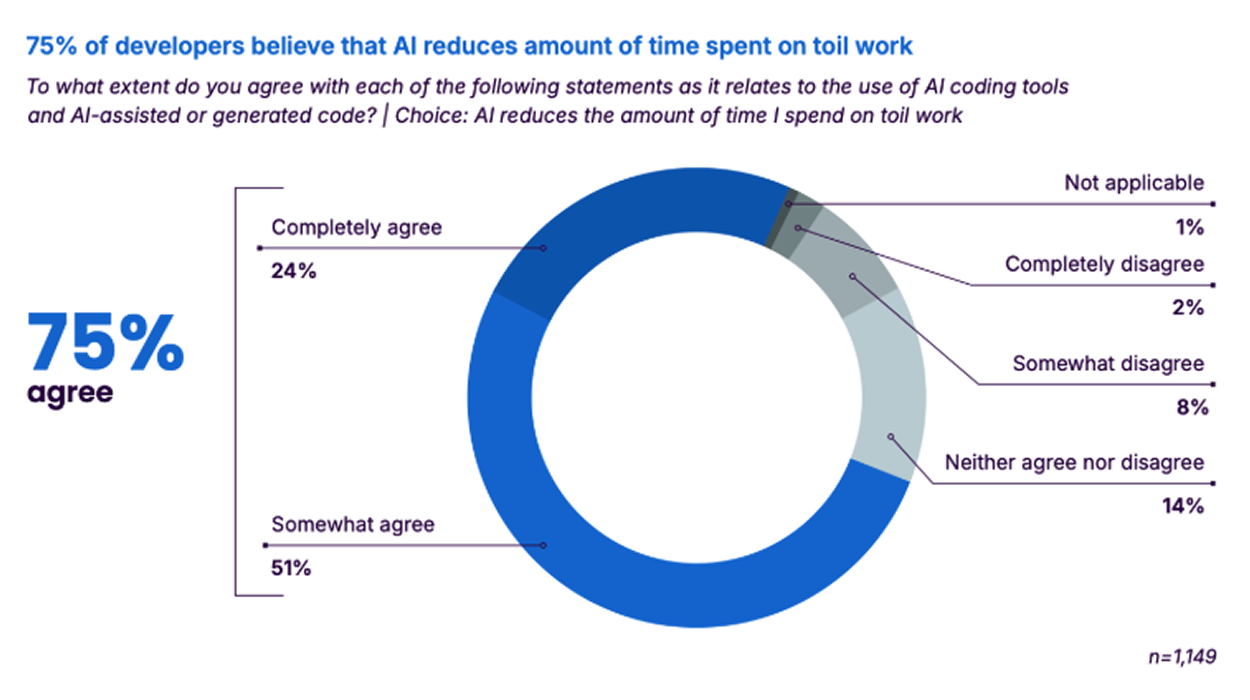
At first glance, the data looks promising. Our study found that developers are reporting real benefits, such as an average personal productivity boost of 35%. Furthermore, 75% of software developers believe that AI reduces the amount of time they spend on "toil work"—those tedious tasks that sap energy and slow down innovation.
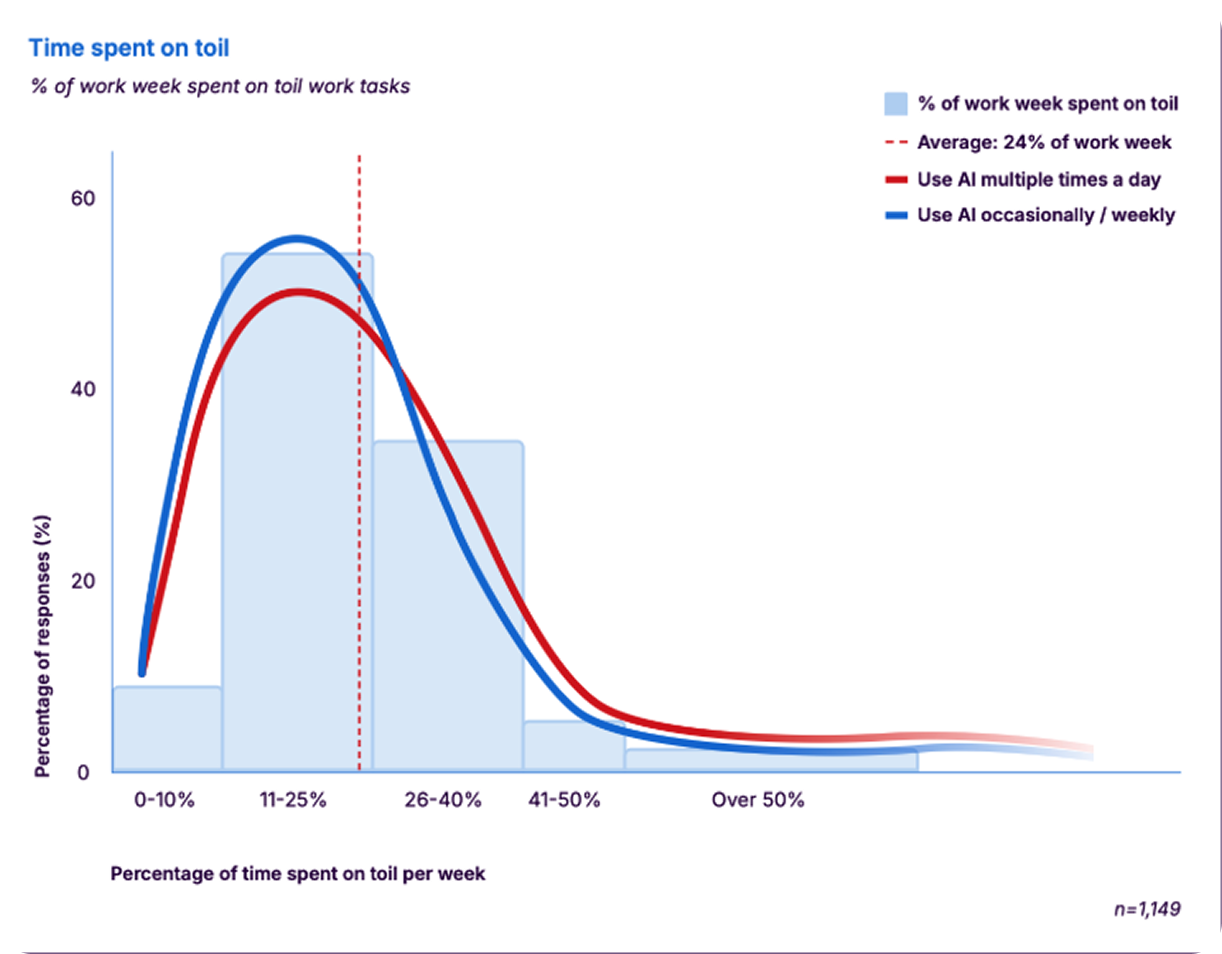
However, when we look under the surface, the picture becomes more complicated. When asked to estimate the time spent on various development tasks throughout their work week, software developers reported spending nearly a quarter of it (23–25%) on toil tasks. Interestingly, this percentage remains almost identical for both frequent AI users and those who use it less often.
Swapping old frustrations for new ones
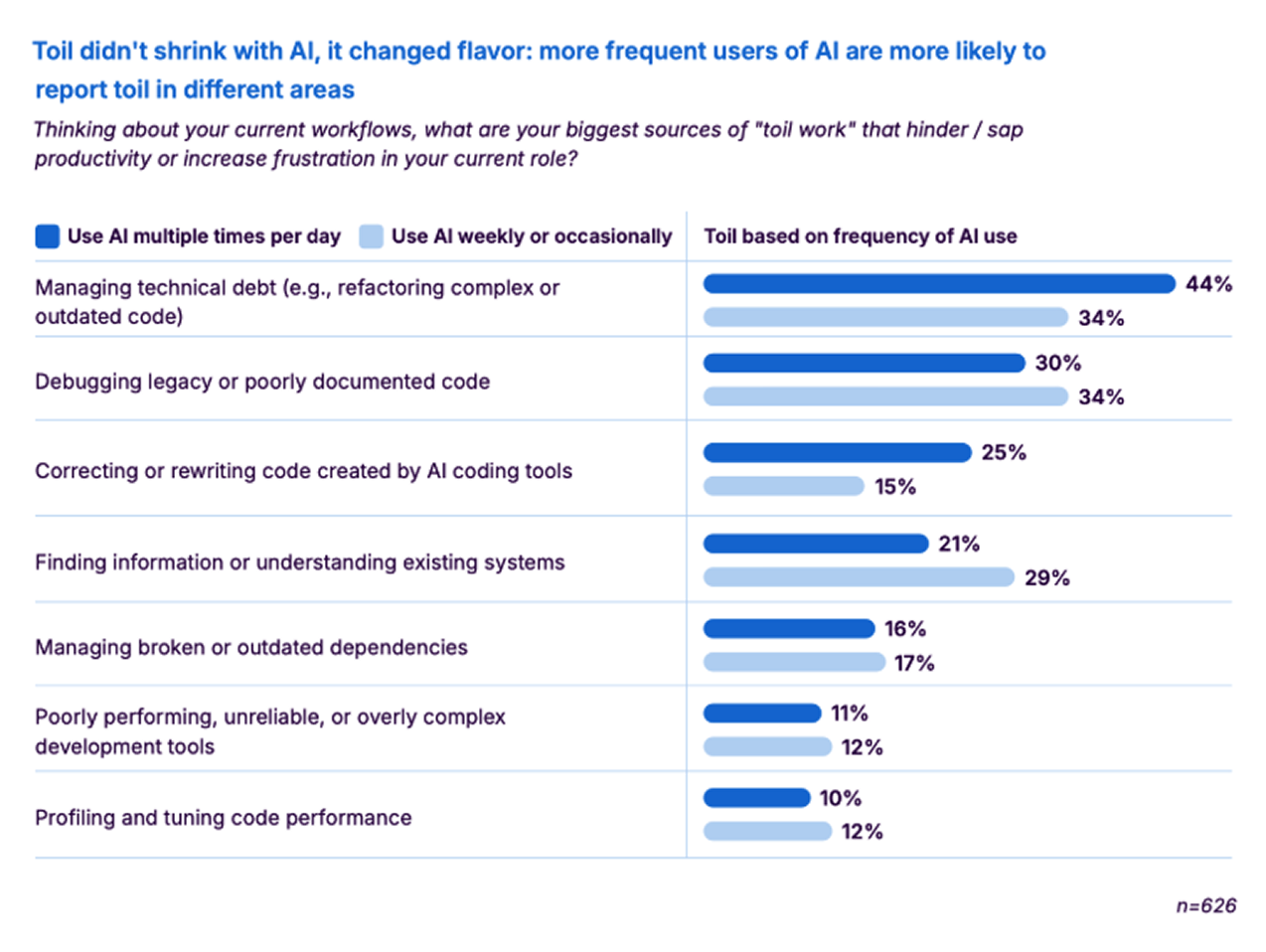
The research reveals a "great toil shift." While AI helps clear away old software development hurdles, it simultaneously creates new ones downstream.
- Less frequent AI users are more likely to report toil from tasks AI is traditionally good at, such as debugging poorly documented code and understanding legacy systems.
- The most frequent AI users, however, are seeing toil move into new areas: managing technical debt and—unsurprisingly—correcting or rewriting code created by generative AI tools.
This shift suggests that while we’ve accelerated code generation, we’ve merely moved the pressure to code management and verification.
AI and technical debt
The impact of AI on technical debt is a double-edged sword. We found that AI is taking away with one hand and giving back with the other.
On the negative side, 88% of software developers report at least one negative impact of AI on technical debt. A majority—53% of developers—attributed this to AI creating code that looked correct but was unreliable. This is a particularly pernicious problem, as it can create a false sense of code security that leads teams to skip thorough review.
40% of developers say AI has increased debt by generating unnecessary or duplicative code.
Conversely, developers are intelligently applying AI to the parts of debt management they hate most, which is why 93% of developers also report at least one positive impact of AI on technical debt. For example, 57% of them cited improved documentation as a primary benefit. This is especially true for senior developers, who value AI's ability to help wrestle with poorly documented legacy systems.
Solving the challenge: Vibe, then verify
The takeaway for engineering leaders is clear: generating code faster is only half the battle. If you ship code that looks right but isn't reliable, you aren't improving the long-term health of your codebase.
To escape this productivity paradox, organizations must move toward a "vibe, then verify" culture. This means granting developers the freedom to "vibe"—to experiment and create boldly with AI—while maintaining a rigorous accountability framework to "verify."
Teams are already doubling down on deterministic, rules-based AI code review to manage this surge. Our data shows that 70% of developers are already using static code analysis tools, and SonarQube users report stronger positive impacts on code quality and rework costs than non-users. By integrating automated verification directly into the workflow, teams can ensure that the speed gains of AI lead to real-world quality improvements, rather than just faster-growing technical debt.